
Good Sentences: World Cup


As the men’s soccer World Cup approaches, we thought we’d put together some materials about the planet’s most popular sport.
Enjoy!
—The Good Sentences Team
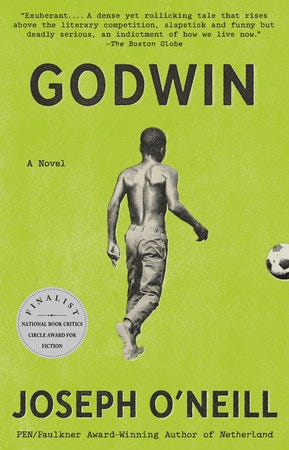
1. Fiction: Godwin by Joseph O’Neill (2024)
2. Poetry: A Boy Juggling a Soccer Ball by Christopher Merrill (2001)
Favorite Lines:
“he keeps the ball aloft with a nudge

   of his neck, heading it

from side to side, softer and softer,

   like a dying refrain”
—Picked by Eileen Barson, Class of 2026 (Home Team: Switzerland)
3. Essay: A 2026 World Cup That Doesn’t Rip Off Fans? Some Cities Are Showing That It’s Possible by Leander Schaerlaeckens (2026)
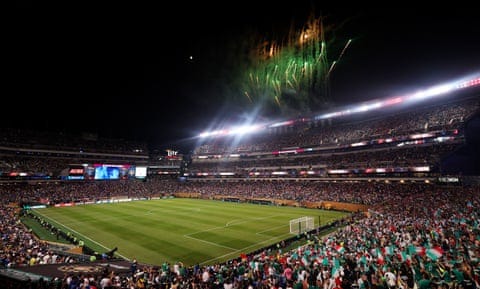
Photo Credit: Jared C. Tilton/FIFA/Getty Images
Favorite Sentences: “‘Being a host city for the World Cup is very different than being a host city for any other major event,’ Kane told the Inquirer. ‘And people recognize that it changes the profile of the city of Philadelphia.’”
—Picked by Fumi Takano, Class of 2026 (Home Team: Japan)
Michigan Sentences: Here is an article in the Wall Street Journal that draws on the research of Professor Brian McCullough, the Director of the Center for Sports and Sustainability at the University of Michigan.
Soccer Tackles Its Carbon Problem (2025)
Sample:
“In the UkK.—the birthplace of soccer—a quarter of stadiums are at risk of annual flooding by 2050, according to the country’s Meteorological Office. Meanwhile, extreme heat stress is already causing concern for player welfare around the world.”
“Many clubs are working to mitigate these risks by reducing stadium emissions, embracing sustainable technologies, and working to shape the behavior of fans, as the industry comes to terms with its own contributions to climate change.”
“Completed in 1996, the Johan Cruyff Arena is home to Netherlands soccer club Ajax. The stadium has since been retrofitted with more than 4,200 solar panels, as well as two superbatteries with a combined capacity of 8.6 megawatt-hours, the last of which was installed in 2023. And, as befits a Dutch organization, it also has exclusive access to a windmill—with a capacity of 2 megawatts. All this provides enough renewable energy to power not only match days, but potentially thousands of homes in the local community, according to Tanja Dik, chief executive of the Johan Cruyff Arena. The stadium aims for its operations to be net positive by 2030.”
Syllabus Sentences: When I want to teach students about what the sociologist Marc Granovetter describes as the “threshold model of collective behavior,” I often point to something that will likely happen a lot during World Cup matches this summer: fans doing “the wave.”
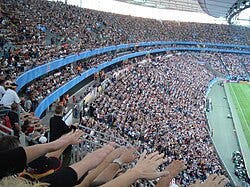
Photo Credit: Florian K, “Stadium Crowd Performing ‘the Wave’ at the Confederations Cup 2005 in Frankfurt” CC BY-SA 3.0
Thresholds, An Act of Philanthropy, and The Wave (Chapters 3, 4, and 5 of The Syntax of Sports, Class 7: Information Flow)
Sample:
Prof. Barry: The idea of “thresholds” comes from a paper written by Stanford sociologist Mark Granovetter back in 1978. He explains the concept in terms of somebody’s willingness to join a riot. Here’s a key part of the paper. Please read it for us, Ms. Amos. Although Granovetter is a sociologist, I think that you, as a psychology major, will connect with what he has to say.
Ms. Amos: “Different individuals require different levels of safety before entering a riot and also vary in the benefits they derive from rioting. The crucial concept for describing such variation among individuals is that of ‘threshold.’”
Prof. Barry: Granovetter then offers a definition and some examples. We’ll start with the definition.
Ms. Amos: “A person’s threshold for joining a riot is defined here as the proportion of the group he would have to see join before he would do so.”
Prof. Barry: And now the first two examples: “radicals” and “instigators.”
Prof. Barry: Can anyone think of how thresholds might apply in sports?
Ms. Bristol (jumping in): What about when football fans do “the wave”?
Prof. Barry: The wave is a great example. We might use Granovetter’s term “instigators” to describe the fans who’ll start the wave without any prompting. But then there are also folks who won’t jump in until they see it really take shape.
Ms. Bristol: Right.
Prof. Barry: Which one are you, Ms. Bristol? Have you ever started a wave?
Ms. Bristol: No. I’m someone who waits until the wave goes around the stadium a few times.
Prof. Barry: How about rushing the field and tearing down the goalposts after a big win?
Ms. Bristol: No. I’ve never done that.
Prof. Barry: But can you see how it might be a threshold question?
Ms. Bristol: Yeah. If enough of my friends rushed the field, I’d probably rush it too.
Prof. Barry: And if the entire student section did?
Ms. Bristol: Then I definitely would.
Book Recommendations
For good sentences by a Uruguayan fan
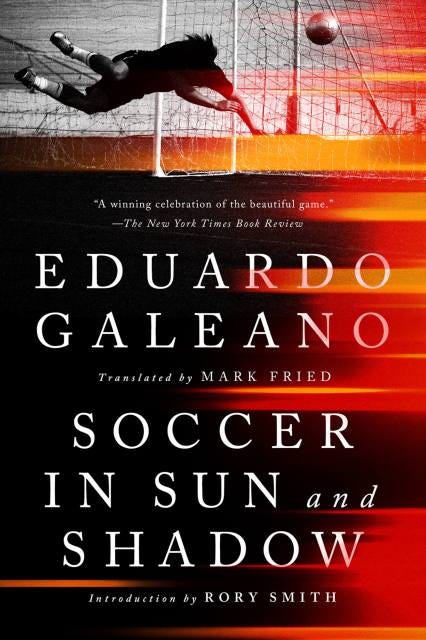
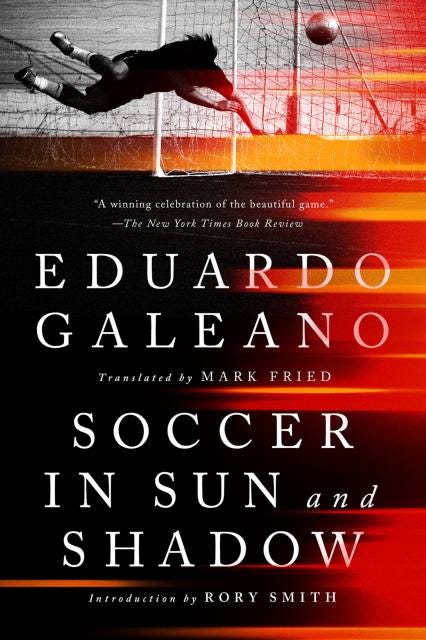
Soccer in Sun and Shadow by Eduardo Galeano, translated by Mark Fried (1998)
Sample: “Like all Uruguayan children, I wanted to be a soccer player. And I played quite well. In fact I was terrific, but only at night when I was asleep. During the day I was the worst wooden leg ever to set foot on the little soccer fields of my country.”
For good sentences by an English fan
The Game of Our Lives by David Goldblatt (2014)
Sample: “As football completed its mutation from an idiosyncratic aristocratic pastime to the most significant popular cultural practice of working-class life, it came to embody, in its sporting, cultural and commercial norms, the changing class balance and political compromises of the age.”
For good sentences by a U.S. fan
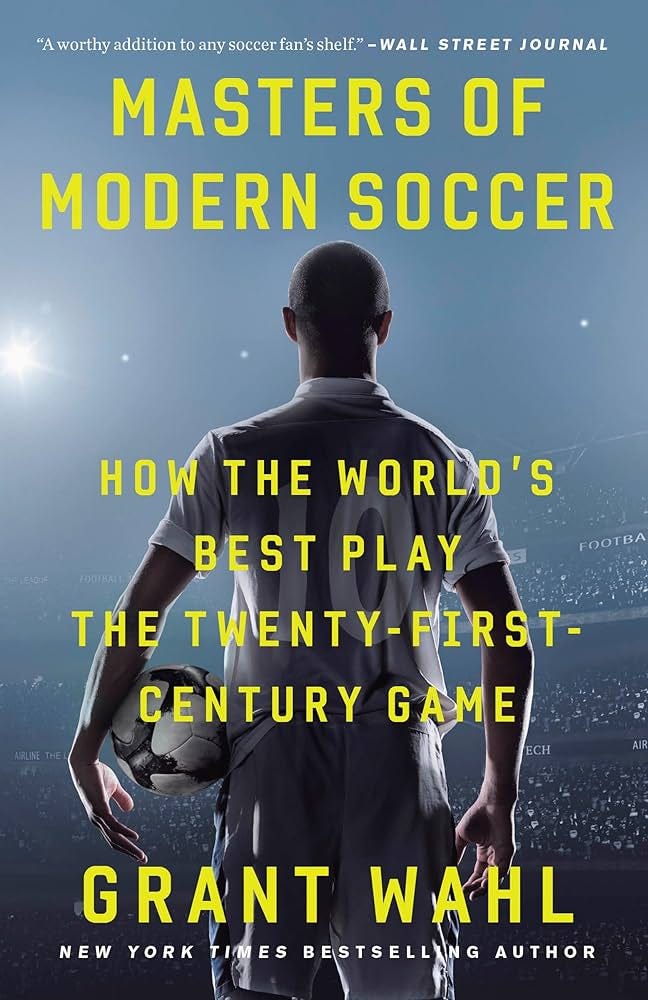
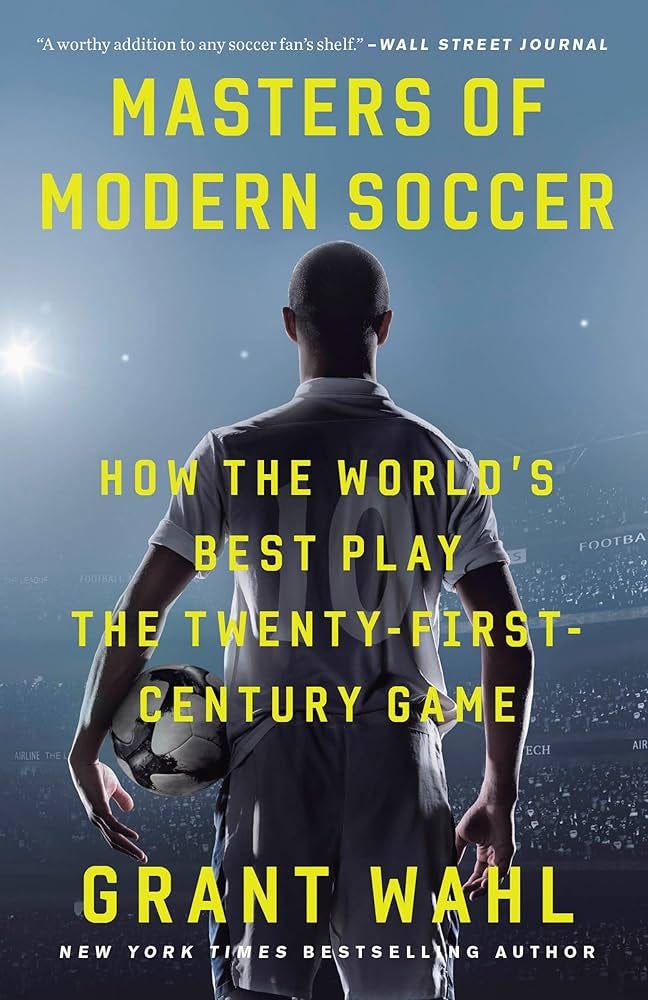
Masters of Modern Soccer by Grant Wahl (2018)
Sample:
“The medical staff focuses on players’ recovery and keeps close tabs on their physical performance metrics in training and in games. (Martínez notes that the injury risk for players skyrockets whenever they exceed 3,000 to 3,500 minutes played in a season.)”
Quick Tip
Here is a quick tip borrowed from the Nobel Prize-winning psychologist Daniel Kahneman and his analysis of the possible ways to frame the outcome of a World Cup final: the words you choose can change the world people see.